The August 2024 full moon, also known as the Sturgeon Moon, is taking place very soon — but this one is extra special as it will also be a Blue Moon.
Any avid stargazer will know there are two types of Blue Moon: seasonal and monthly.
Seasonal Blue Moons occur when there are four full moons in a single season (spring, summer, fall and winter) instead of the typical three, whereas a monthly Blue Moon refers to the second full moon within a single calendar month.
Read on for everything to know about the upcoming August full moon and when to see it...
What is a Blue Moon?
A Blue Moon has nothing to do with the colour of the moon (it's not actually blue). Instead, it's all to do with the timings of full moons during the year.
Many cultures around the world have given names to each of the full moons. For example, February's full moon is named a 'snow moon' and May's full moon is known as the 'flower moon' — a celebration of the flowers that grow during May.
What to Read Next
"A 'Blue Moon' has a couple of different definitions, but each refers to a higher number of full moons than usual occurring within a certain period of time,"Anna Gammon-Ross, senior astronomer at the Royal Observatory Greenwich, tells Country Living.
"This can happen because it takes 29.5 days for the moon to complete each cycle of phases, so very slightly less than the length of a typical month. When two full moons occur within one month, this is a monthly Blue Moon. Alternatively, a seasonal blue moon is when four occur in one astronomical season, rather than the usual three."


When it the next Blue Moon?
The next seasonal Blue Moon will take place very soon on Monday 19th August (18:26 GMT). It's also the first of four Full Supermoons in 2024, taking place from August to November.
However, the next monthly Blue Moon will fall on May 31, 2026.
How often is a Blue Moon?
Blue Moons are actually fairly common, appearing once every two to three years, according to NASA. In 2018, we unusually had two monthly Blue Moons in one year and only two months apart.
According to the RMG, the next time we will get two in a year will be 2037.
How did the Blue Moon get its name?
It's unclear where the term "Blue Moon" came from, but the RGM think it could be a mispronunciation of the disused word "belewe", which means "to betray". This may be a reference to the betrayal of the usual idea of having one full moon in each month.
"There are conflicting sources about where the term 'Blue Moon' has come from, but they all refer to the fact that the moon turning blue is a rare or impossible event," says Anna.
The best country house hotels in the UK for a grand getaway
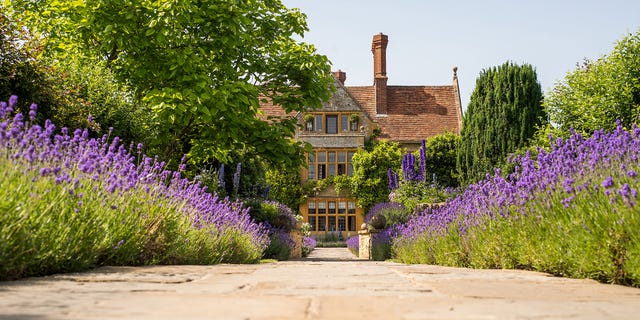
Le Manoir aux Quat'Saisons, a Belmond Hotel, Oxfordshire
One of the best country house hotels in the country, if not the world, Raymond Blanc's exquisite Oxfordshire hotel is the perfect marriage of French influence and English tradition. A lavender-lined path leads up to Le Manoir's authentic honey-stoned exterior and, inside, a magical world for gastronomes awaits.
The impeccable restaurant has held two Michelin stars for nearly 40 years, and the sumptuous bedrooms, creatively inspired by Raymond's travels, are the perfect place to sleep off a truly indulgent feast. All palates are catered for, and vegans and vegetarians even get their own menu. This high-end and luxurious hotel offers a bucket-list experience that's definitely worth saving up for.

Grantley Hall, Yorkshire
It would be hard to find a more luxurious destination than this magnificent, 17th-century stately home hotel – part of the Relais & Chateaux group – set in meticulously landscaped grounds on the edge of the Yorkshire Dales. Staff offer excellent and friendly service, with every detail taken care of, for a truly relaxing experience.
Inside Grantley Hall, the decor is grand and opulent, with eye-catching modern artwork contrasting with its historic architecture. In the 47 bedrooms, pick from a pillow menu for your desired comfort level, then flick a switch and watch your wall art transform into an HD television.
There's also a spectacular spa, which boasts a hydrotherapy pool, snow room and nordic spa garden, and five restaurants to choose from – including Michelin-starred Shaun Rankin at Grantley Hall.
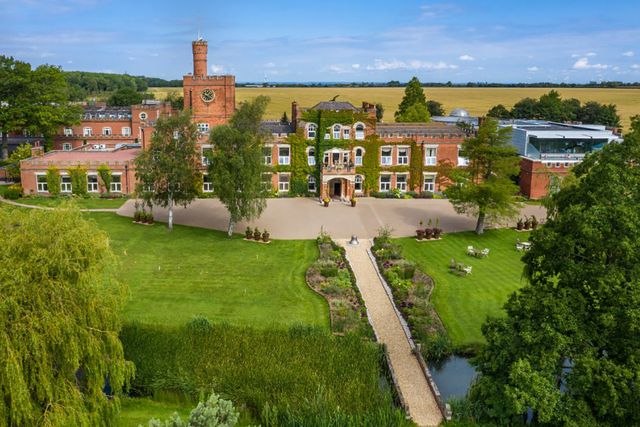
Ragdale Hall, Leicestershire
Spa lovers in search of the ultimate country house hotel to retreat to for a mini-break needn't look further than beautiful Ragdale Hall in the Leicestershire countryside. This gorgeous country pile is no average manor house. It features a rooftop infinity pool for you to enjoy the views of the countryside from the steamy water, and an array of wellness and fitness experiences that focus on your mind and body.
Combining state-of-the-art facilities and treatments with the charm of traditional Victorian architecture, Ragdale Hall is a luxurious and relaxing health spa. So, whether you want to be pampered, kick-start your health regime or just enjoy the beautiful surroundings, this country house hotel is worth checking out.

Farlam Hall, Cumbria
This boutique country house hotel from luxury collection Relais & Chateaux is a true home-from-home, offering a warm welcome with friendly staff and comfortable rooms. It's surrounded by beautiful countryside, with both the Lake District and Hadrian's Wall in easy reach – but inviting sofas surrounded the fireplace in the lounge area, with board games to enjoy if the weather isn't playing ball.
Farlam Hall's 12 bedrooms and six suites feature silky-soft bedding, Molton Brown toiletries and a turndown service. Families in particular will love the self-contained stable suites, which have their own living rooms and kitchens just a stone's throw from the main building. And in the restaurant, chef Hrishikesh Desai serves up Michelin-starred meals with ingredients grown in the hotel's own kitchen gardens.
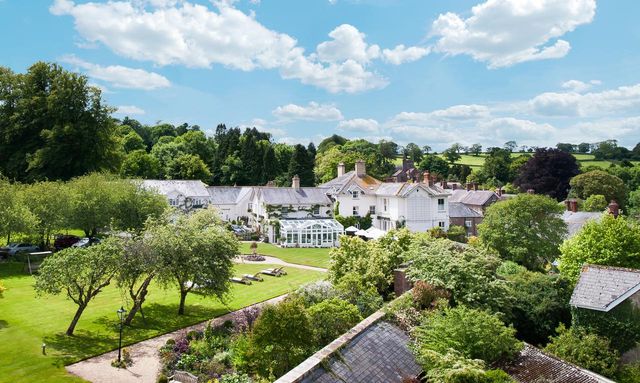
Summer Lodge Country House Hotel, Dorset
Get away from it all at this beautiful country house hotel that has everything you need for a relaxing retreat. At Summer Lodge, there's an all-weather tennis court, gym, pool and spa to keep you busy before popping your feet up with a G&T by one of the log fires.
Interiors are traditional – think country-chintz pelmets, patterned carpets and grand paintings. It's luxurious and authentic at the same time, and we love the little touches, like the homemade shortbread waiting for you in your room. When you're ready to leave your cosy surroundings, head into the pretty village of Evershot or further afield to Dorchester. Thomas Hardy fans will have a field day in this part of the country.
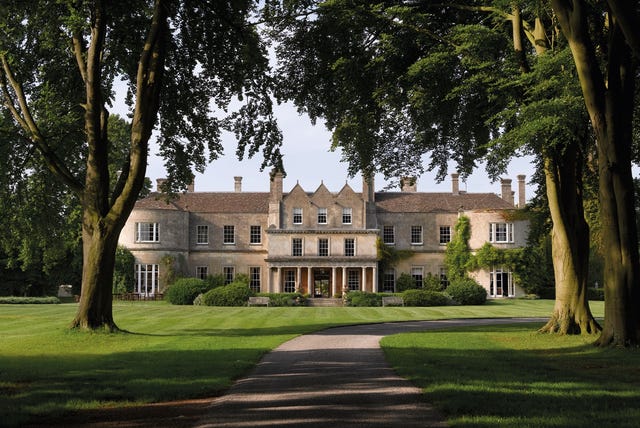
Lucknam Park, Wiltshire
Lucknam Park Hotel & Spa is an elegant country house hotel in Wiltshire, set within 500 acres of listed parkland. The Palladian mansion turned five-star hotel is privately owned and a member of Relais & Chateaux, the masters of luxury hotels for gourmands.
The mile-long lime and beech tree-lined drive sets the scene for the stunning retreat that awaits at the bottom of it. The hotel's 42 rooms and suites are a masterclass in refined luxury, and you can choose from Michelin-starred dining at Restaurant Hywel Jones or the slightly less formal Brasserie.
Even though historic Bath is just six miles away, it will be hard to leave the state-of-the-art spa, equestrian centre and five-a-side football field. It's perfect for everyone, from families (including your dog!) to couples.
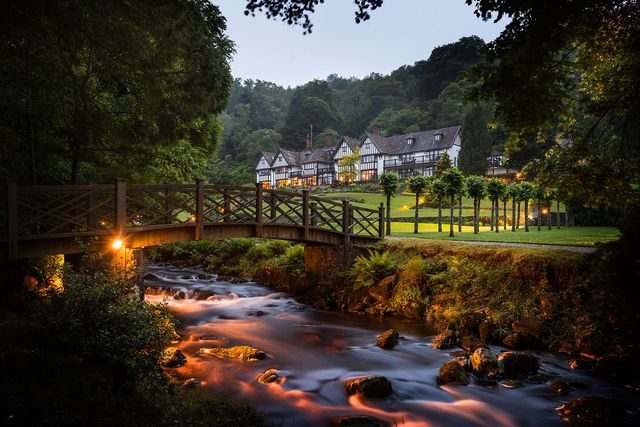
Gidleigh Park, Devon
If you're in search of a country house hotel in Devon, look no further than this rural retreat. The Tudor-style manor in the Dartmoor National Park, making it an excellent choice for amblers. The interiors feature open fires, wood-panelled walls and wonderful antiques – which seem even more inviting after a day spent enjoying the great outdoors. Set within more than 100 acres of private woodland, Gidleigh Park is without a doubt one of the UK's most luxurious country house hotels.
More fine antiques and artworks decorate the elegant guestrooms, each named after a local landmark. The award-winning restaurant offers a locally sourced menu of treats created by executive head chef, Chris Eden.
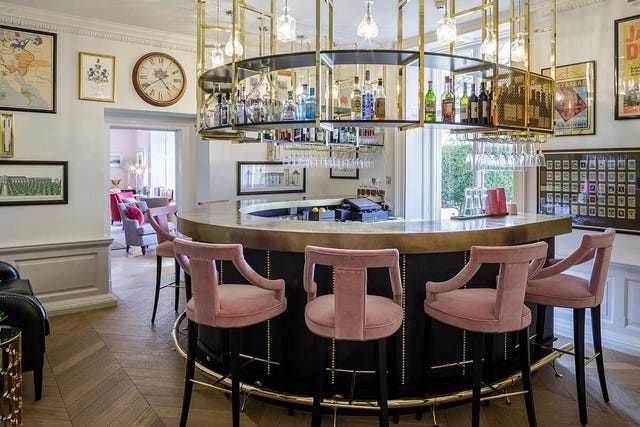
The Slaughters Manor House, Cotswolds
The Cotswolds has no shortage of grand rural hotels – though if you love a traditional country house hotel exterior but prefer a more contemporary boutique interior, the options are a little more limited. Enter The Slaughters Manor House, the perfect blend of both old and new. The honeyed stone of the 17th-century building gives way to pre-requisite snug lounges with open fires, but there's also a slick cocktail bar and billiards room, and funky decor throughout.
Escape the crowds in the five acres of grounds with a picnic packed by the staff, or enjoy a pretty mile-long stroll to the village of Upper Slaughter. Awaiting you on your return at the restaurant are dishes such as lingiune with ricotta and courgette flower, cod with lobster, gem lettuce and shellfish sauce, and Orkney scallop crudo with Isle of Wight tomatoes.
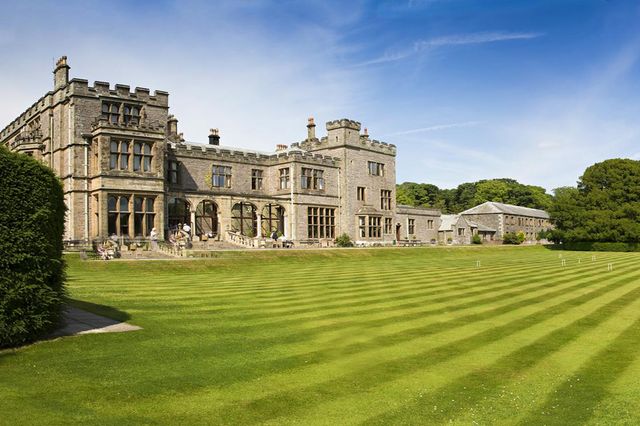
Armathwaite Hall Hotel & Spa, Lake District
Location, location, location… If it's views you want, this country house hotel has them in spades – this is the Lake District after all, one of the most staggeringly scenic spots in the country. Overlooking Bassenthwaite Lake, Armathwaite Hall Hotel is surrounded by 400 acres of parkland, and the Victorian stately home at its heart, with its towers and tall chimneys, is equally impressive.
This is a family-friendly destination for all generations. Couples can relax in the modern spa and pool, and kids can run wild in the woods.
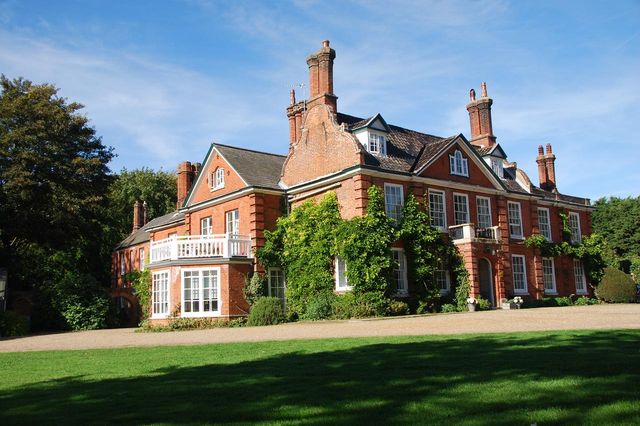
The Norfolk Mead, Norfolk
Georgian country house meets boutique hotel at this elegant tranquil hideaway, located in the heart of the Norfolk Broads on the banks of the River Bure. The Norfolk Mead's 16 modern rooms and cottages have a classic country decor.
The hotel is an excellent choice for special occasions or a weekend away. There are snug but stylish lounges, a raved-about restaurant, and a small spa for pampering treatments. Just four miles away, the Broads National Park offers over 200 miles of footpaths, as well as scenic cycling routes.
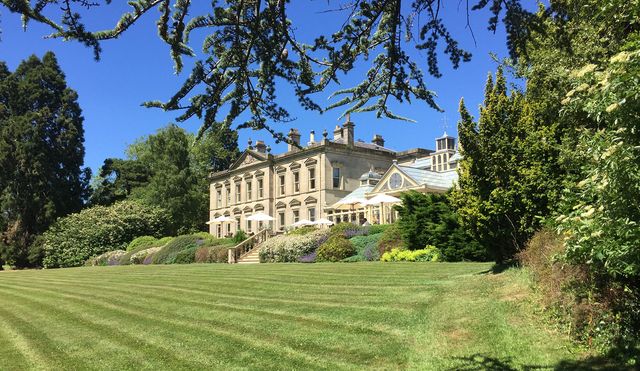
Kilworth House Hotel, Leicestershire
Kilworth is a Grade II-listed, Italianate country house set in 38 acres of landscaped parkland. The estate is surrounded by the rolling countryside of rural South Leicestershire. The house itself has been painstakingly restored it to its former glory, blending Victorian opulence with fine food and contemporary luxury to suit modern-day guests.
The ornate Orangery, with its stunning glass ceiling, overlooks the pretty parkland, while the rooms, many boasting four-poster beds and feather plumes, overlook the Victorian walkway. The rooms are also laden with plush cushions, classic paintings and mahogany lamps, as well as vintage armoires and eye-catching upholstery.
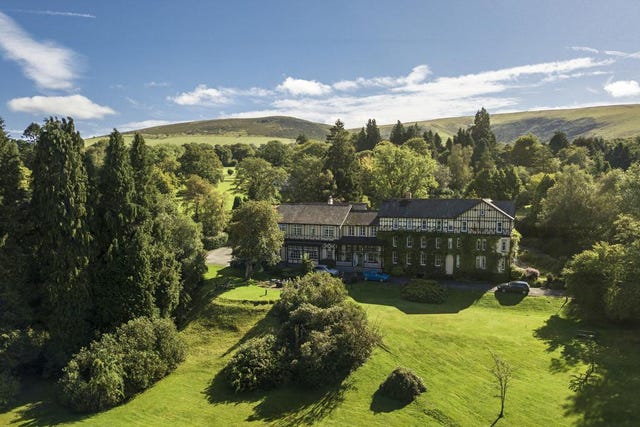
Lake Country House Hotel, Powys
The Lake Country House offers a wide range of activities, services and facilities for an outdoorsy, active stay in a beautiful Welsh country house hotel. Set in 50 acres of land and overlooking the lakes and the River Irfon in Powys, it boasts an indoor pool, a golf course and tennis courts – plus, there’s a fully-equipped gym and spa, with a range of health and beauty treatments available for guests in need of a little pampering.
Visitors are also spoilt by the variety of outdoor pursuits on offer here, such as riverside walks (dogs are welcome at the hotel, so you can have your pooch in tow), fishing in a well-stocked trout lake and even croquet on the lawn.
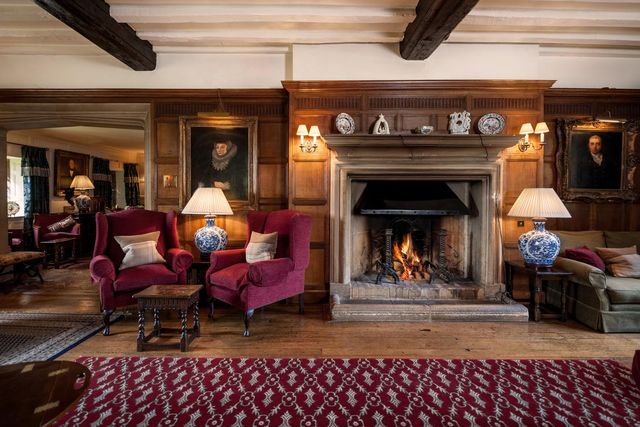
Buckland Manor, Cotswolds
Sitting in 10 acres of beautiful gardens that are made even prettier by the multitude of rose beds, Buckland Manor is just five minutes away from the quintessential Cotswolds town of Broadway, with its bustling cobbled streets, art galleries and boutique shops. For something a little more bucolic, guests can set off on one of the scenic walks that lead from the doorstep of this country house hotel.
The honey-stoned building contains traditional wood-panelled interiors and you can expect squashy sofas, classic oil paintings, crackling log fires and excellent afternoon teas.
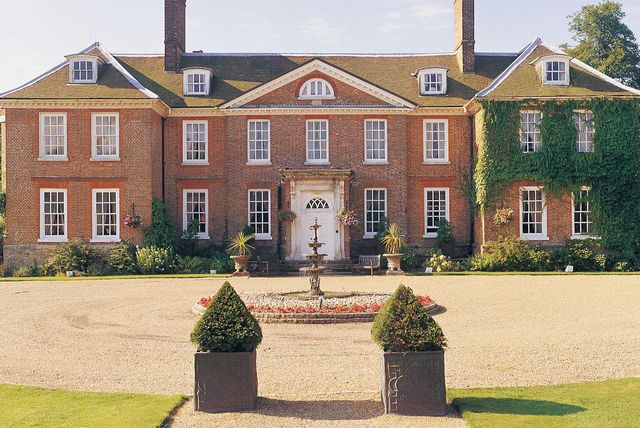
Chilston Park, Kent
If it's an authentic, classic British country house hotel you're after, stop the search, Chilston Park near Maidstone is it. Everything here is traditional, from the formal restaurant serving British cuisine to the decor, starring patterned carpets, grand paintings, large fireplaces and plenty of wood panelling. The red-brick exterior is quintessentially British, too.
Inside, the rooms are sumptuous, with four-poster beds and pelmets galore. Afternoon tea is an unashamedly gluttonous affair, but there are 22 acres of beautiful grounds in the Kent countryside to walk it all off.
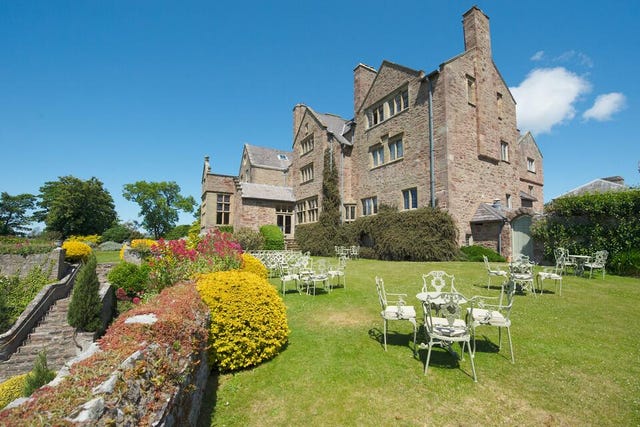
Bodysgallen Hall, Conwy
Bodysgallen Hall is a historic house and contemporary spa set amid 200 acres of wooded parkland, above the Victorian seaside town of Llandudno in north Wales. The country house hotel basks in glorious views over Conwy Castle and the Snowdonia National Park. It's steeped in history, with part of the manor house hotel dating back as far as the 13th century.
And it still retains much of its character today, with oak-panelled walls, ornate fireplaces and rambling corridors adding to its rustic charm. The restaurant, with tall, stained-glass windows, has won 3 AA Rosettes and the spa, complete with an indoor swimming pool, steam room, and sauna, is an oasis of serenity.
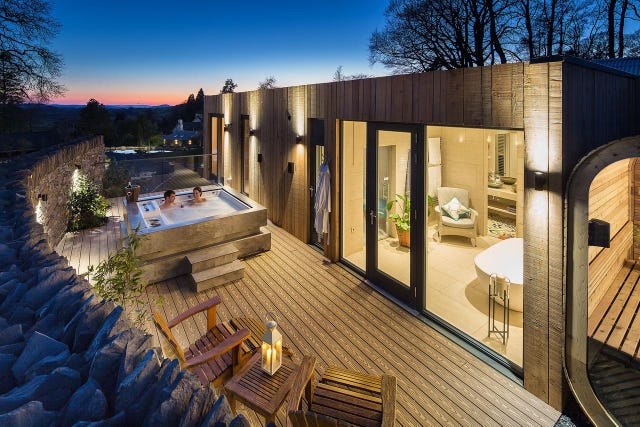
Gilpin Hotel & Lake House, Lake District
Arguably the most luxurious country house hotel experience on offer in the Lake District, Gilpin Hotel & Lake House is a super-special retreat loved by couples. It manages to combine flawless service, interiors and food with an unfussy, relaxed atmosphere.
The 30 bedrooms at Gilpin Hotel all have typical Lake District views, and some have their own cedar wood hot tubs. For an intimate, truly tranquil experience, the Lake House, just a mile down the road, is a stunning property surrounded by 100 acres of grounds. This hotel-meets-private-country-house has its own lake (take the rowing boat out with a bottle of bubbles), boat house, hot tubs, saunas and swimming pool.
There's a complimentary chauffeur service up to the main hotel for when you want to dive headfirst into Michelin-starred fare at Source or enjoy a more informal meal at Gilpin Spice.
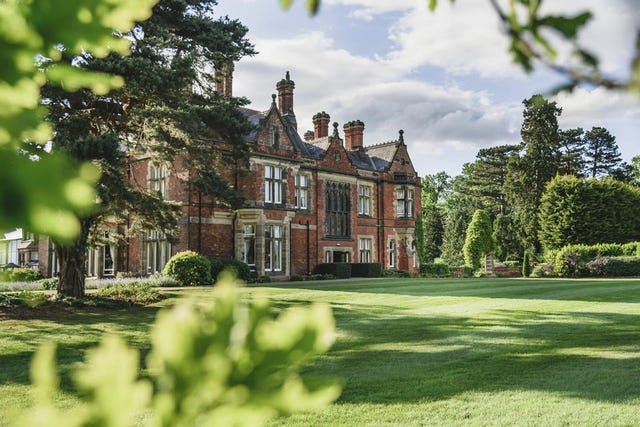
Rockliffe Hall, County Durham
With an 18-hole golf course, a superb spa and two excellent restaurants, Rockliffe Hall is the perfect country house getaway, set in County Durham’s stunning countryside.
The relaxed, intimate atmosphere is felt throughout the hotel, from the public areas to the spacious guest rooms, and the serene spa is the perfect place to spend the day. Many come for the golf course, while the surrounding north-eastern coastline, or the Yorkshire Moors, are within easy driving distance.
The Clubhouse, serving locally sourced fare, offers a cosy spot to return to after a busy day. And new for this summer is Terra, a special residency by the chef James Close, who joined the hotel as its culinary director in February. The menu will celebrate the bounty of both land and sea.
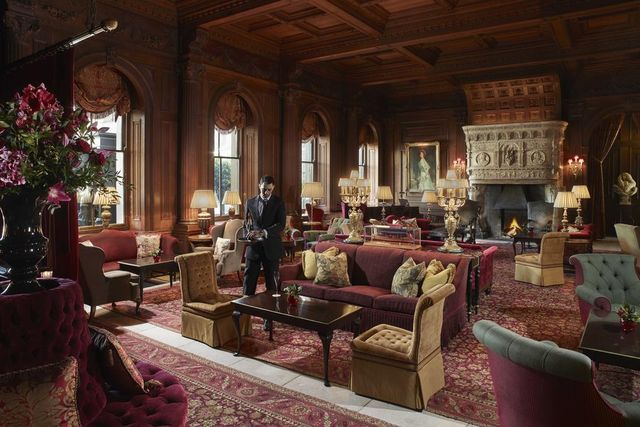
Cliveden House, Berkshire
The grande dame of country house hotels, Cliveden is a sprawling Italianate mansion that combines a contemporary spa with traditional British grandeur. This is a place with an intriguing history and it's even hosted royals – Meghan Markle stayed here the night before her wedding to Prince Harry back in 2018. It has seen its fair share of scandal, too.
Rooms range from classically dressed and sumptuous, to more contemporary suites with hot tubs. A suite in the main house, with access to a terrace overlooking the parterre, will be a memorable choice.
Enjoy a picnic on the Thames in one of the hotel's boats, or head to the fabulous spa, which is an oasis of tranquillity hidden behind a walled garden. There are frequent pop-ups by acclaimed skincare experts, the most recent of which is Teresa Tarmey.
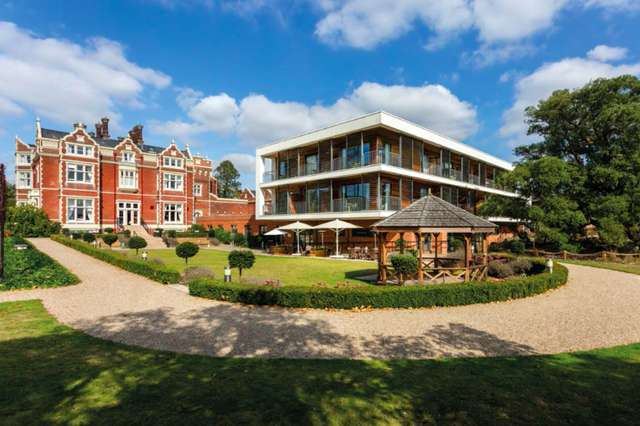
Wivenhoe House, Essex
Ideal if you're looking for a rural escape from London, Wivenhoe House in Essex has the feel of a country house hotel, while being close enough to the shops and restaurants of Colchester, making it perfect for a weekend getaway with the best of both worlds. The hotel is split between the original 18th-century country house and the more contemporary rooms of its new wing.
You'll find floor-to-ceiling windows and spacious balconies overlooking the park. Dining at the restaurant involves hearty breakfasts (try the full English, or the veggie option), and classic lunches and dinners.
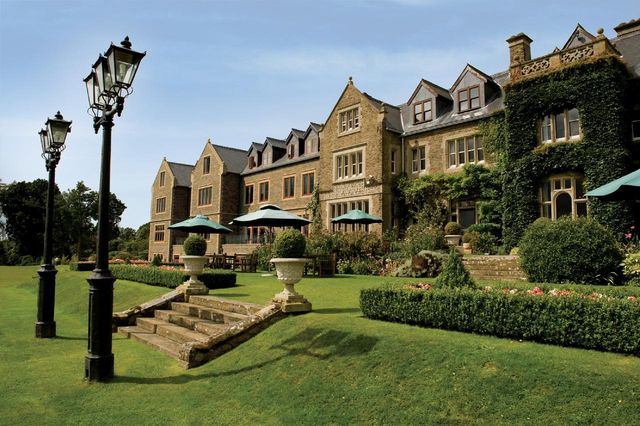
South Lodge, Horsham, West Sussex
There are lots of pretty parts of England, and one of the most attractive has to the be the South Downs, which, after all, is an Area of Outstanding Natural Beauty. Situated between Haywards Heath and Horsham, with striking views of the famous nearby chalk hills, this 19th-century country house hotel is a true haven, just an hour out of London. Old meets new inside South Lodge, with the traditional grandeur of dark wood panelling and chandeliers in the restaurants and lounges contrasting with the contemporary spa.
With 93 acres of gardens and parkland, there's plenty of choice for slow strolls before hunkering down by a fire or reposing poolside.
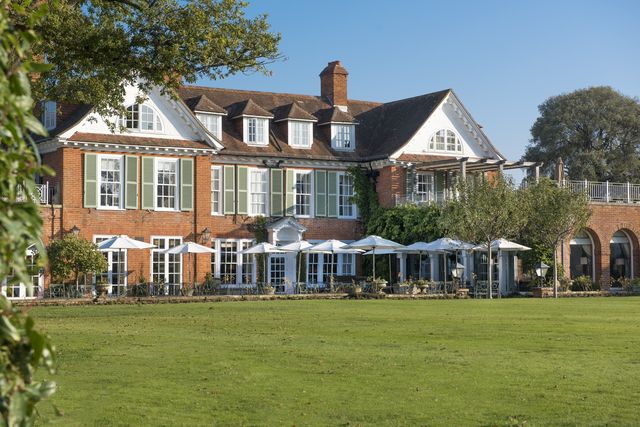
Chewton Glen, New Milton, Hampshire
A five-star country house hotel, Chewton Glen is an 18th-century manor that is the epitome of luxury, while still being a great option for families.
The rooms in the main house are classic in style, but you can also choose to stay in one of the luxurious treehouses for a bucolic escape in the forest. Country walks abound and, since the hotel sits just a mile from the coast, seaside strolls are also within reach.
The proximity to the sea also influences the menu at James Martin's the Kitchen, where the freshest catch gets the celebrity touch in relaxed surroundings. You can also enjoy indulgent afternoon teas and more formal fare at the Dining Room, as well as cookery courses with James himself if you book in advance.
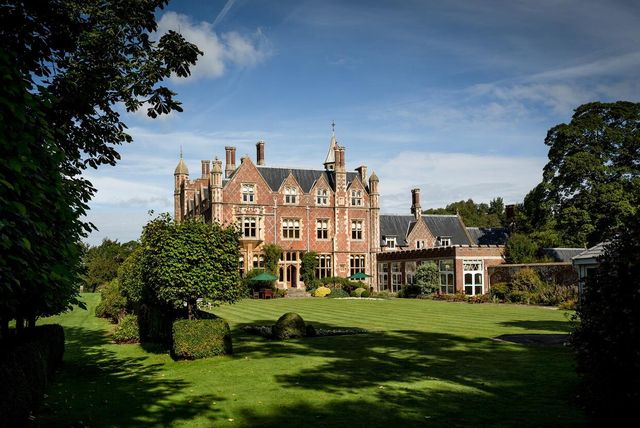
Horsted Place, East Sussex
Within a Gothic-Revival building dating back to 1850, the grand and majestic Horsted Place in East Sussex was once a favoured hotspot of the royal family. It's just as regal today, with traditional decor and a fine-dining restaurant.
The design gives a nod to its historic past, with grand oil paintings and stately, gilded staircases. All of the 17 rooms and suites enjoy views over the charming courtyard, the gardens or the South Downs in the distance. Take afternoon tea in the Royal Lounge or relax beside a log fire with a glass of bubbles for company. In the summer, the terrace awaits.
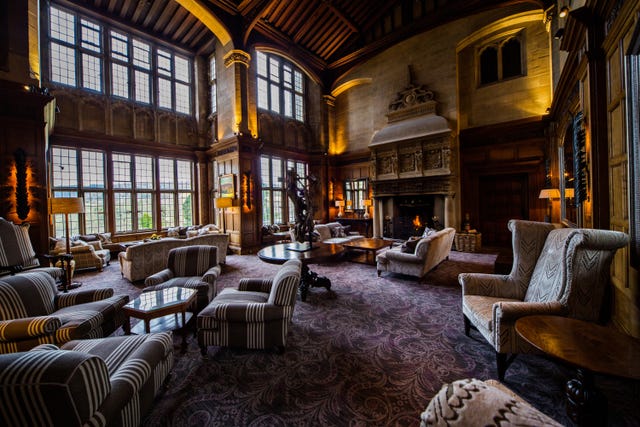
Bovey Castle, Devon
This grand Dartmoor dwelling was built at the behest of famous stationer William Henry Smith. It’s a country-house hotel for the active – the vast 275-acre estate has a championship golf course, and other pastimes available on the grounds include fly-fishing, archery and clay-pigeon shooting. You’ll also be able to learn how to make gin and cider.
The spa at Bovey Castle has a Gentleman’s Quarter for grooming, plus an impressive menu of treatments. Guests can check in to a room in the neo-Elizabethan main house, or one of the three-storey lodges that are dotted throughout the landscape.
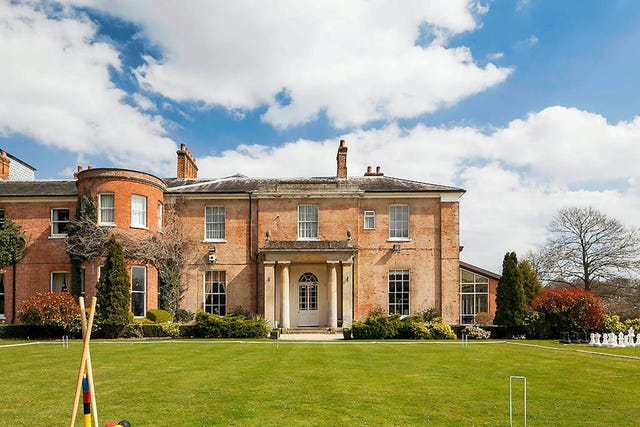
The Retreat Elcot Park, Berkshire
Country-house hotels don’t have to be dated and chintzy. Case in point: the Retreat Elcot Park in Berkshire, once the residence of Percy Bysshe Shelley’s mother and recently revitalised by the Signet Collection. The brand is also behind the Mitre in Hampton Court.
The grand house is now home to a smart pan-Asian restaurant, a brasserie in the orangery and a spa with facilities such as a Himalayan salt sauna, a flotation chamber and a heated outdoor pool. There’s also a charming courtyard with regular pop-up markets.
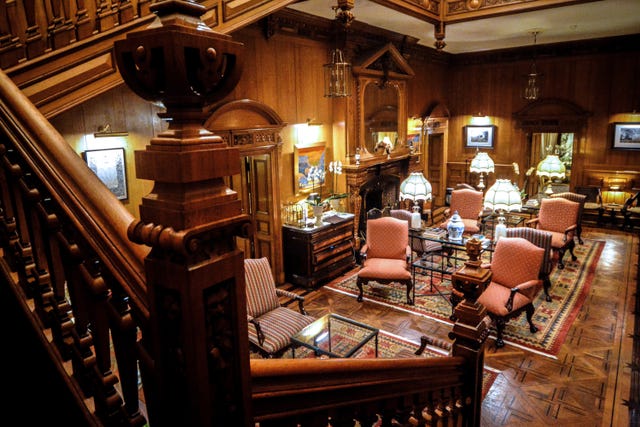
Palé Hall, Snowdonia
This luxury retreat on the edge of Snowdonia is one of the loveliest country house hotels in the UK, with turrets, towers and various wings to lose yourself in. Of course, the mountain in the neighbouring national park is the star of the show, and if you don’t fancy climbing it, you can catch the handy train to the top instead.
Back at Palé Hall, you’ll be able to recuperate in style. Its grand suites have period features (wood panelling, domed ceilings and, naturally, lots of antiques), and the 18-bedroom Victorian manor also has lawns that lead down to the riverbank.
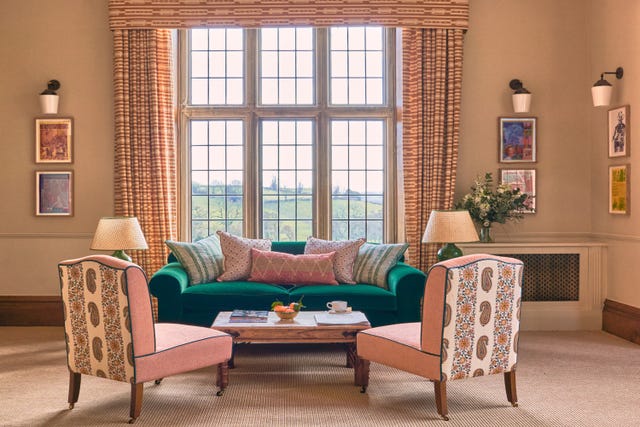
Wildhive Callow Hall, Derbyshire
There’s a Victorian house at the heart of Wildhive Callow Hall, deep in the Derbyshire countryside – but its Treehouses and Hives, tucked away in woodland, will try to tempt you away from the more conventional accommodation. If you do go for the latter, select a suite with a bath tub in the bedroom and admire the surrounding scenery as you bathe. You’ll also be able to gaze at the valley from the comfort of the Garden Room restaurant.
The 35-acre estate spans wild meadows, gardens and woods, and outside of the parameters, things only get more scenic, since it’s conveniently close to the Peak District National Park.
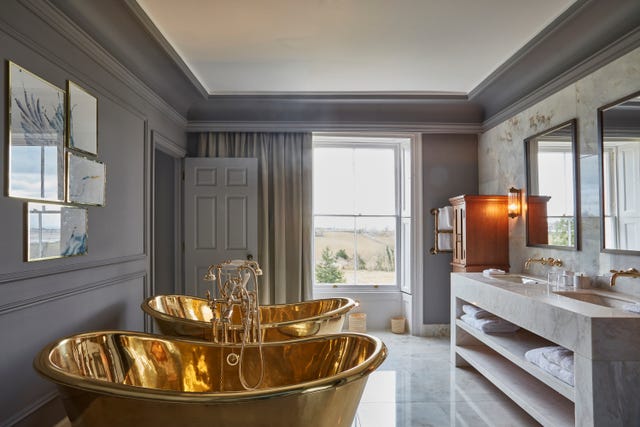
Lympstone Manor, Devon
Lympstone Manor is on the edge of the Exe estuary in Devon, with a Michael Caines restaurant showcasing not only the chef’s considerable talents, but his passion for this corner of the world. The estate is an hour or so away from coastal towns such as Lyme Regis and Dartmouth, and the wild expanses of Exmoor and Dartmoor.
Along with rooms in the listed Georgian main house, guests can check in to shepherd’s huts that are hidden away in the woods, with outdoor decks and bath tubs. There are also suites with terraces and fire pits.
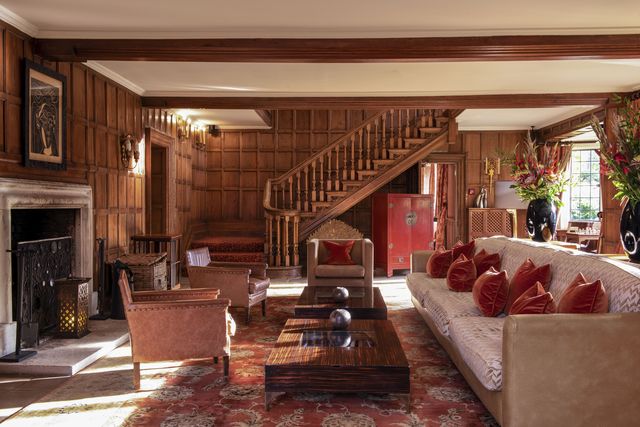
Whatley Manor, Wiltshire
In the Wiltshire market town of Malmesbury, Whatley Manor is one of the finest hotels in Britain. The luxurious country house hotel has a restaurant with a Michelin star (and a Green Michelin star for sustainability efforts). Here, guests can enjoy delicious, refined dishes, and tasting menus for both vegans and vegetarians are available, too. There’s also the more relaxed second restaurant, Grey’s, perfect for a casual lunch or dinner.
As befits such a stately stay, the grounds are beautiful, with a courtyard, immaculate lawns, terraces and an organic kitchen garden. You can retreat to the manor’s spa, or take the waters in Bath, just a 45-minute drive south.
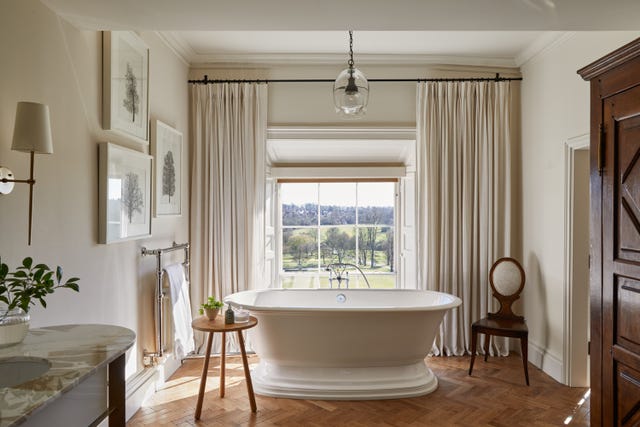
The Grove, Hertfordshire
This expansive rural estate may feel like it’s in the depths of the countryside, but it’s actually less than an hour by car from London, in Chandler’s Cross near Watford. The Grade II-listed Mansion wing has elegant suites inside. During the summer, the outdoor pool area doubles up as a beach club (with added sand), but the 300-acre grounds are equally enchanting in the winter.
The Grove – which is a member of the Leading Hotels of the World collection – has a championship golf course attached, along with an impressive spa dispensing excellent Bamford and Natura Bissé treatments. There are several eating and drinking establishments to try, but for some of the best Indian food you'll ever eat, be sure to book a table at Madhu’s.
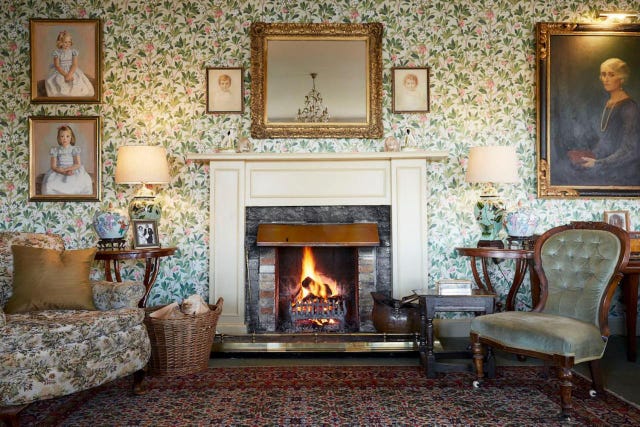
Kinloch Lodge, Isle of Skye
Secluded in the hills of Skye, Kinloch Lodge has been one of the loveliest retreats in Scotland for half a century now. It was once the home of the Duke of Sutherland but has been a hotel in its current incarnation since 1972, when Lord Macdonald and his wife decided to create their dream place to stay.
High on the agenda were comfortable beds, attentive service and, of course, delicious local food. At the restaurant, guests can dine on Highland beef tartare, crab rarebit and Skye roe deer with brambles foraged from the surrounding woods.
Lisa Joyner is the Deputy Daily Editor at House Beautiful UK and Country Living UK, where she's busy writing about home and interiors, gardening, dog breeds, pets, health and wellbeing, countryside news, small space inspiration, and the hottest properties on the market. Previously, she has written for Conde Nast Traveller, House & Garden and Marie Claire magazine. Lisa studied at University For The Creative Arts, where she completed a BA in Fashion Journalism.